
Phone:
(405) 919-3158
Address:
19908 Coverton Way
Edmond, OK 73012

AC not cooling? The 9 most common causes, the six checks a homeowner can safely make first, and the signs that mean it is time to call a technician.
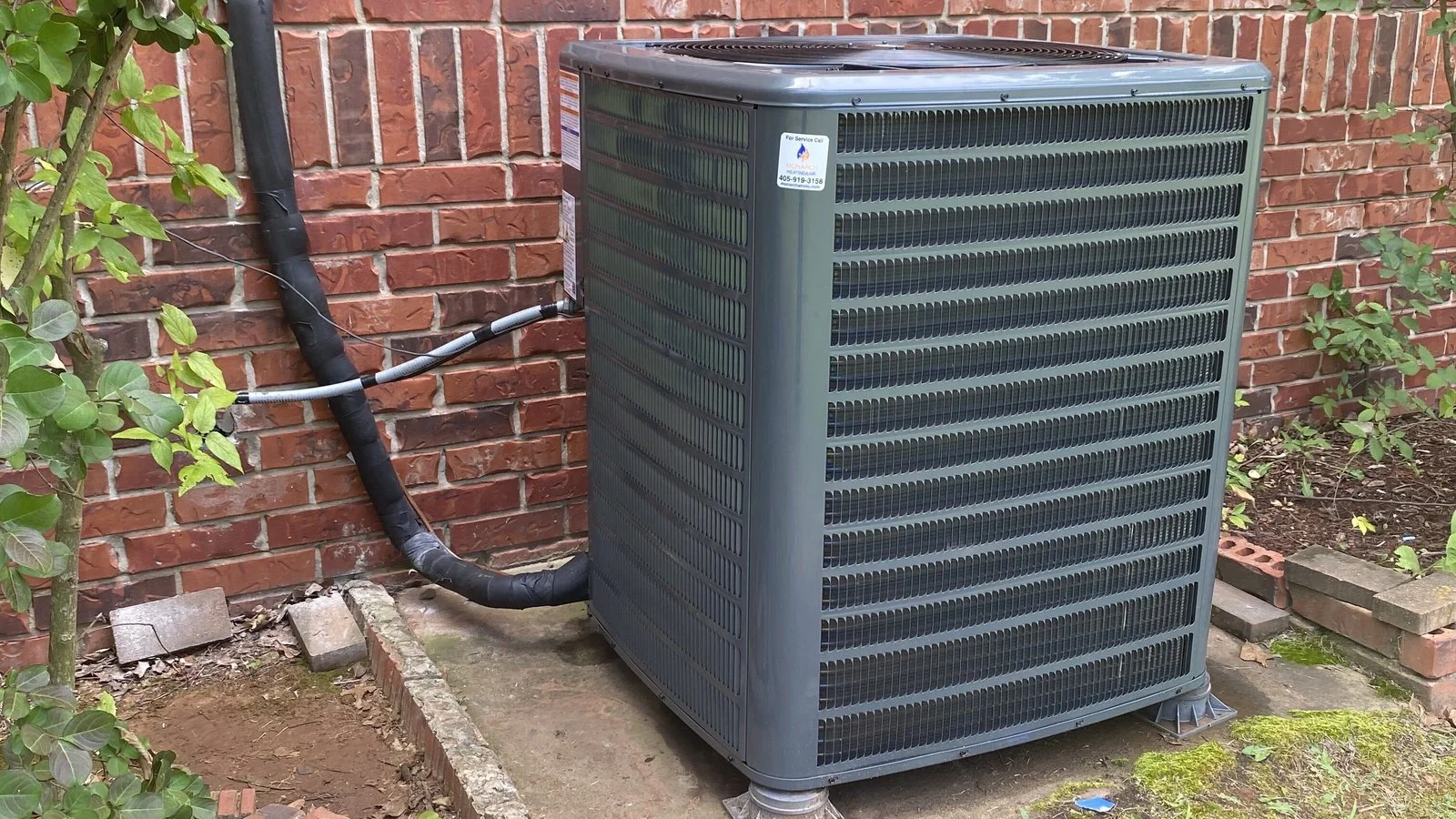
An AC not cooling while the system still runs usually has one of nine causes, and a homeowner can rule out about half of them in 20 minutes without tools.
The sections below explain each cause, which checks are safe for a homeowner, and when the job belongs to a technician.
An air conditioner that runs all afternoon without cooling the house is one of the most common summer service calls in the Oklahoma City metro. It usually happens on the hottest day of the year, when the system is working hardest.
The good news is that many "AC not cooling" problems have a simple cause. A thermostat on the wrong setting, a filter packed with dust, or a tripped breaker can make a healthy system look broken.
Other causes do need a licensed technician. Low refrigerant, a failed capacitor and a frozen coil that keeps refreezing are in that group, and running the system while you wait can turn a small repair into a compressor replacement.
This guide from Monarch Heating & Air, an Edmond-based HVAC contractor serving the Oklahoma City metro, covers:
Start with the table of causes, then work through the homeowner checks in order.
An AC that runs but does not cool usually has one of nine problems: a thermostat setting, a dirty air filter, a tripped breaker, a blocked outdoor unit, a frozen indoor coil, low refrigerant, a failed capacitor, a clogged condensate drain, or leaking ducts. The first four are often homeowner fixes. The rest usually need a technician.
The causes in rows 1 to 4 cost nothing or very little to fix, and a homeowner can check them in minutes. Ruling them out first means a service call, if one is needed, starts at the real problem.
The causes in rows 5 to 9 involve refrigerant, high-voltage parts or hidden ductwork. Those are diagnostic jobs, and guessing at them usually costs more than a visit.
Check six things in this order: the thermostat, the air filter, the breaker and outdoor disconnect, the outdoor unit, the supply vents and the condensate drain. Each check is safe for a homeowner and takes a few minutes. Together they solve a large share of "AC not cooling" calls without a technician.
Set the thermostat to Cool, set the fan to Auto, and lower the setpoint at least 3°F below the current room temperature.
Pull the filter and hold it up to a light. If little light passes through, replace it.
ENERGY STAR recommends checking the filter monthly and changing it at least every 3 months. In Oklahoma homes, red dust, cottonwood and spring pollen often clog a filter in 30–60 days.
The outdoor unit has its own breaker in the main panel and a disconnect box mounted near the unit.
If the breaker has tripped, switch it fully off, wait 5 minutes, and switch it back on. If it trips a second time, leave it off and call a technician. A breaker that trips repeatedly is protecting the system from an electrical fault.
Turn the power off at the disconnect first. Then clear grass clippings, leaves and cottonwood fluff from the fins, and keep plants at least 2 feet away from every side.
A gentle rinse from a garden hose, sprayed from the inside out where possible, removes surface dirt. A pressure washer bends the fins and makes the problem worse.
Open every supply vent and move furniture, rugs and curtains away from return grilles. Closing vents in unused rooms does not save energy in a central system. It raises pressure in the ducts and can help freeze the coil.
Many systems have a float switch that shuts the AC off when the condensate pan fills with water. If the pan is full, the drain line is clogged.
Clearing the line with a wet-dry vacuum at the outdoor end usually resets the switch. A drain that clogs again within weeks needs a technician to find out why.
When the indoor fan runs but the air is not cold, the cooling side of the system has stopped working. The most common causes are a frozen evaporator coil, low refrigerant from a leak, a failed capacitor or contactor in the outdoor unit, or a dirty condenser coil that cannot release heat.
Ice forms on the indoor coil when too little warm air crosses it. A clogged filter, closed vents, low refrigerant or a weak blower motor can all cause it.
To thaw a frozen coil:
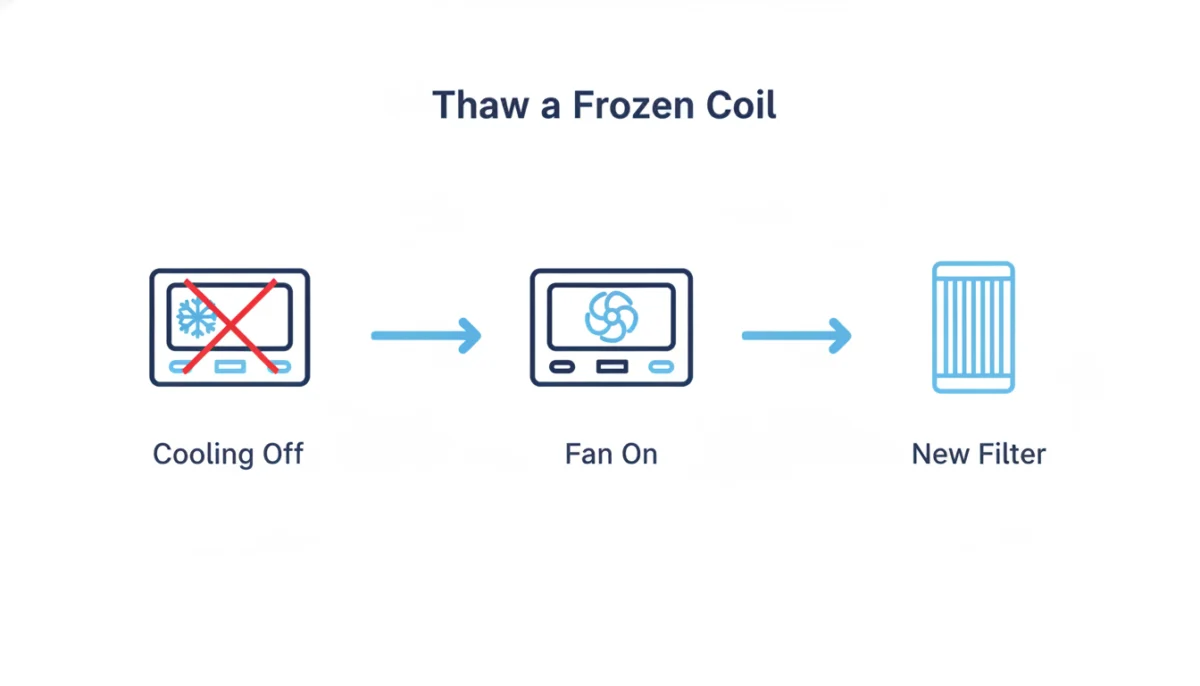
If the coil freezes again with a clean filter, the likely cause is low refrigerant or an airflow fault, and the system needs a technician.
An air conditioner does not use up refrigerant. A system that is low on refrigerant has a leak.
Under the EPA's Section 608 rules, only certified technicians can buy and handle refrigerant for home AC systems. Older systems built for R-22 are harder to service, because U.S. production and import of R-22 ended on January 1, 2020.
A capacitor gives the compressor and the outdoor fan motor the push they need to start. When it fails, the outdoor unit often hums but the fan does not turn.
A capacitor can hold a dangerous electrical charge even with the power off. Replacing one is technician work.
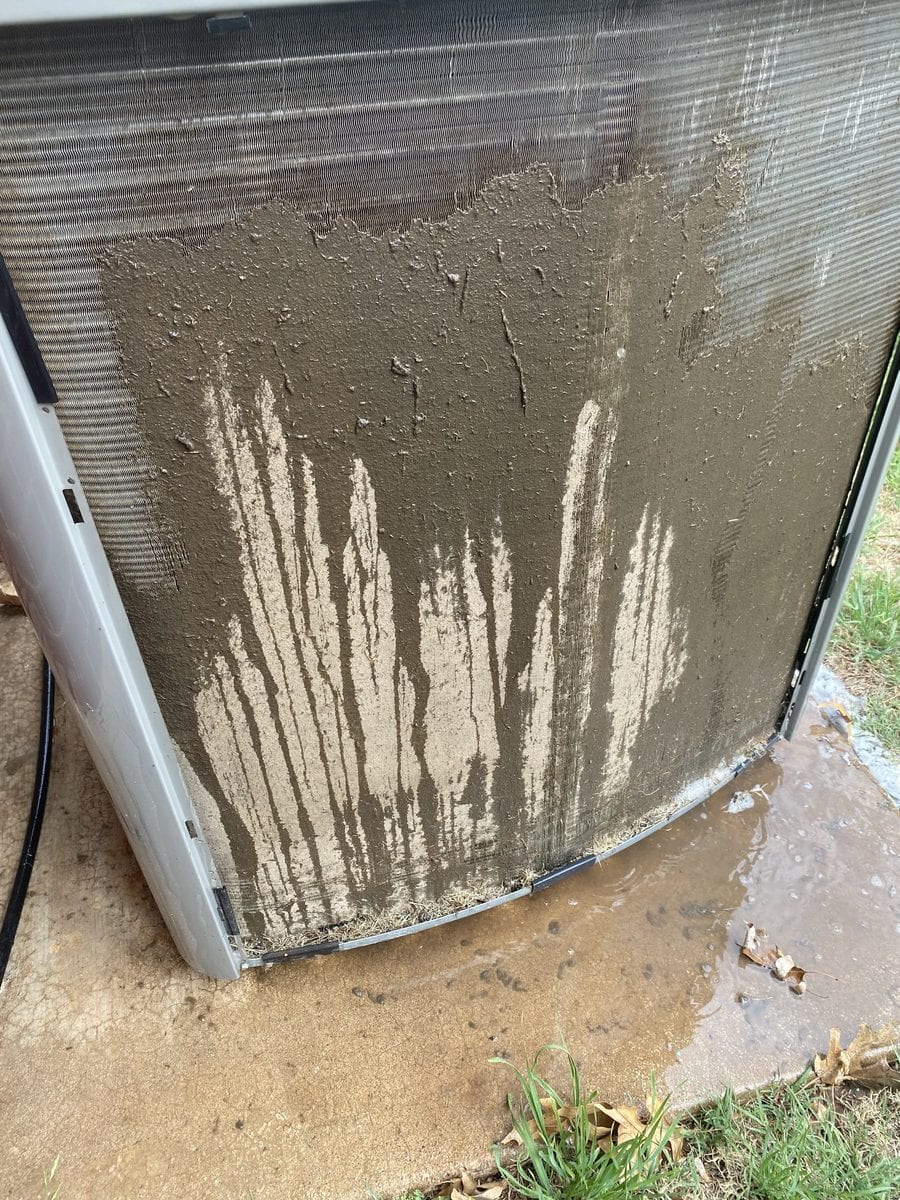
The outdoor coil releases the heat the system removes from your home. ENERGY STAR notes that dirty coils reduce cooling, make the system run longer and shorten its life. Cottonwood fluff packed into the fins in May and June is a common cause in central Oklahoma.
Yes, within limits. Most central air conditioners are designed to keep a home about 20°F cooler than the outdoor air. On a 100°F Oklahoma afternoon, an indoor temperature of 78–80°F can be normal operation. An indoor temperature of 85°F or higher points to a problem.
HVAC contractors size systems with ACCA Manual J, using a local "design temperature" that is exceeded only about 1% of the hours in a year. Manual J design temperatures across Oklahoma run from about 95°F to 102°F.
Oklahoma City's first 100°F day arrives around July 10 in an average year, and the city's record highs are above 110°F. On those afternoons, a correctly sized system may run continuously and still lose a few degrees.
Use a kitchen thermometer to measure the air at a return grille, then at the nearest supply vent, after the system has run for 15 minutes. A difference of 15–20°F is generally normal.
A difference well below 15°F points to low refrigerant or a dirty coil. A difference well above 20°F points to an airflow restriction.
When most of the house cools but one room or the upstairs stays warm, the problem is usually air delivery, not the air conditioner. Leaking or disconnected ducts, crushed flex duct in the attic, closed dampers and attic heat are the common causes in Oklahoma City metro homes.
ENERGY STAR estimates that a typical duct system loses 20–30% of the air moving through it to leaks, holes and poorly connected sections. Ducts in an attic lose even more, because the attic air around them can be far hotter than the outdoor air in an Oklahoma July.
A duct inspection looks for disconnected joints, crushed runs, missing insulation and undersized returns. Monarch Heating & Air's air duct repair service covers sealing, re-connecting and re-insulating ductwork in metro attics and crawlspaces.
Turn the system off and call a technician if the outdoor unit hums without the fan turning, a breaker trips more than once, ice returns after a thaw, you hear grinding or hissing, or you smell burning. Running an air conditioner that is not cooling can turn a minor repair into a compressor failure.
A Monarch Heating & Air technician evaluates the actual equipment, explains what was found, and answers your questions before any repair is authorised. Nothing is decided over your head.
Monarch is a family-owned, BBB-accredited (A+) contractor based in Edmond, with a 4.9-star Google rating. The office is open Monday to Saturday, 7:30 a.m. to 5:00 p.m. See the AC repair service in Oklahoma City or schedule service online.
Most cooling failures in July start as small maintenance problems in April and May. A clean filter, a clear outdoor unit and a spring check-up by a technician prevent many of the causes in this guide. ENERGY STAR recommends a cooling check-up every spring, before the heavy-use season begins.
A technician checks the refrigerant charge, cleans the coils, tests the capacitor and electrical connections, and clears the condensate drain. ENERGY STAR notes that airflow problems alone can cut system efficiency by up to 15%.
Monarch Heating & Air's AC maintenance service covers the full spring check-up. Homeowners who want it scheduled every year can ask about the Monarch Comfort Club maintenance plan.
Yes, if you see ice on the lines, hear grinding or humming without the fan turning, or smell burning. Set the thermostat to Off, and set the fan to On if the coil is frozen. Running a system that is not cooling can damage the compressor.
Turn the thermostat to Off. Switch off the AC breaker in the main panel and wait 5 minutes. Turn the breaker back on, set the thermostat to Cool, and wait at least 5 minutes before judging whether the air is cold. If the breaker trips again, call a technician.
Yes. A clogged filter blocks the airflow the indoor coil needs, which reduces cooling and can freeze the coil. Check the filter monthly in summer and change it at least every 3 months, or sooner in a home with pets or heavy dust.
No. Under EPA Section 608, only certified technicians can buy and handle refrigerant for home air conditioners. A system that is low on refrigerant has a leak, and the leak needs to be found and repaired before the system is recharged.
Most central air conditioners are designed to hold a home about 20°F below the outdoor temperature. On a 100°F day, the system may run continuously and still hold the house at 78–80°F. An AC that cannot reach that range likely has a refrigerant, coil or airflow problem.
A frozen evaporator coil usually thaws in 2–4 hours with the thermostat on Off and the fan on On. Heavy ice can take longer. If the coil freezes again after the filter has been replaced, the system needs a technician.
An AC that runs without cooling is rarely a mystery once you check it in the right order. Start with the thermostat, the filter, the breaker and the outdoor unit, because those four cost the least to fix.
If the simple checks do not bring the cold air back, turn the system off before the problem grows. A short diagnostic visit costs far less than a compressor.
Monarch Heating & Air serves Edmond, Oklahoma City and 15 more metro cities. A technician will explain what is wrong before any work is authorised. Start with the AC repair service page.